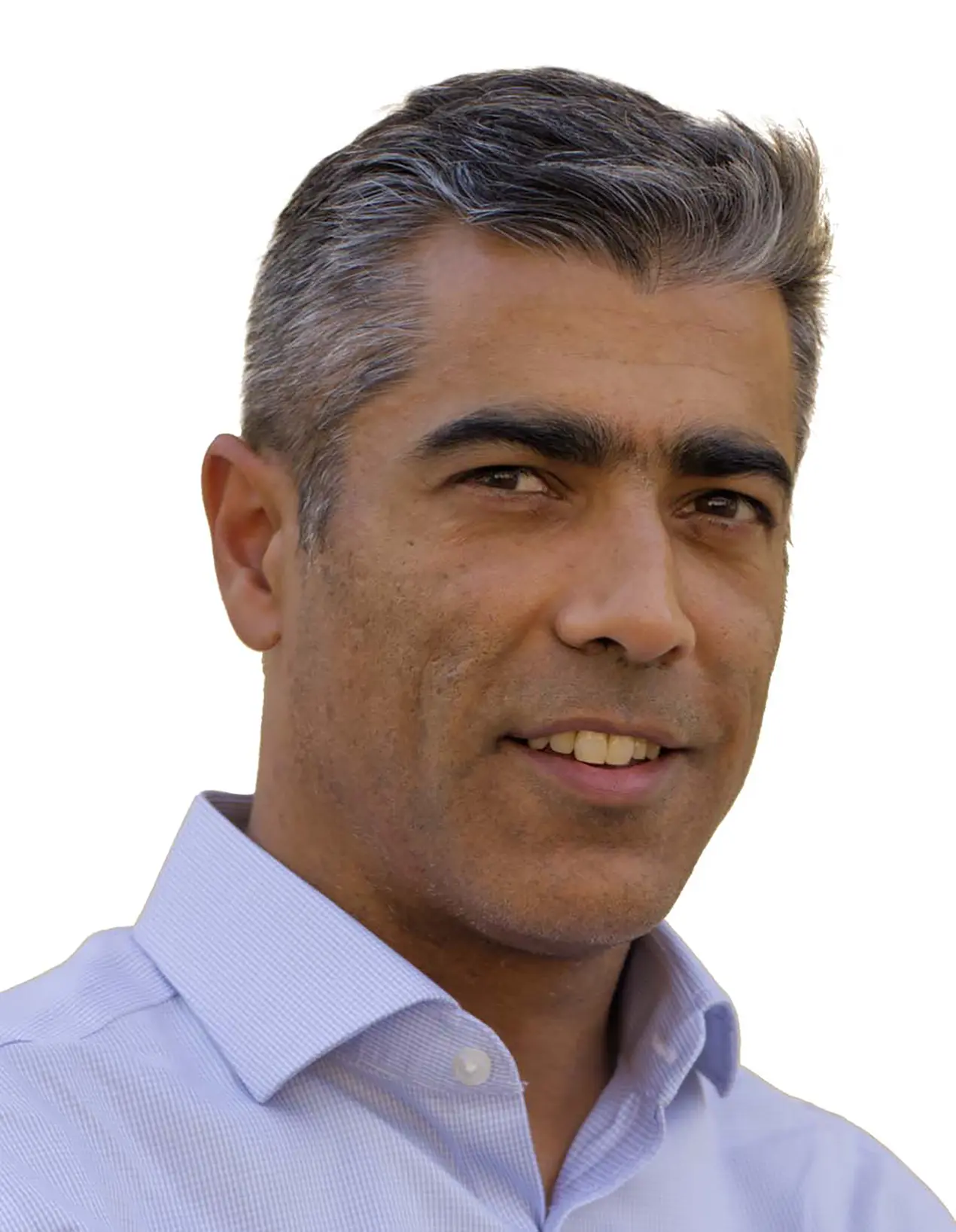
 Fr Isaac-El J. Fernandes SJJesuit PriestSociety of JesusJesuit priest working in Southern AfricaFr. Isaac-El J.FernandesSJ
 Commemoration of the Faithful Departed (All Souls)
Date: | Season: Ordinary Time after Easter | Year: C
First Reading: Wisdom of Solomon 4:7–15
Responsorial Psalm: Psalm 23:1–6
| Response: Psalm 23:1
Second Reading: Romans 5:5–11
Gospel Acclamation: Matthew 25:34
Gospel Reading: Matthew 5:1–12a
Preached at: St. Ignatius Parish in Rhodes Park in the Archdiocese of Lusaka.
I think that we are often freaked out by death, perhaps because it seems such a lonely affair. We haven’t been helped by Hollywood in this regard, because we have visions of the grim reaper, with his long scathe and hideous aspect come to collect on his dues and accompany us into the underworld. Perhaps it is such a terrifying experience because we feel that we have to go it all alone. Even if, as people of faith, we manage to put aside the more stereotypical visions of death as being collected by the grim reaper, and can envisage death as an encounter with our Creator, perhaps we still feel terrified at the thought of standing all alone before the throne of the Almighty God – and being judged for our whole lives. But what if death was not a lonely affair at all? We as human beings are inherently social animals, we were not made to be alone, especially not at the most critical times of our lives. This is why we make every effort to gather around a loved one in their last moments. But what happens once they are gone, what happens once their spirit leaves this earth? Is it a lonely journey to heaven, wherever that may be?
In answering this question, we might be helped by the observations of medical professionals and those who habitually work with the terminally ill. The way that it has been described to me is that often terminally ill patients who are on the verge of death will “delay” their departure to the next life until their family have in a sense “let them go.” It is only natural to want to hold on to a loved one and refuse to let them go, not only because we will miss them if they go, but also perhaps because we fear for them and what will happen to them if they go. At least as long as they are here with us on earth, we feel that they are safe, they are loved, they are surrounded by us, their loved ones. If they go, perhaps we are afraid that they will be all alone, having to journey through the abyss of nothingness to their place of rest. But what if this journey to their place of rest was not a lonely one at all? Why is it that the terminally ill often seem happy to go once we are able to let them go? I would like to suggest that there might be something of a tug of war happening in these instances. On the one side, there are the relatives on earth who are holding the dying person back, willing them to remain clinging onto life. On the other side, there are a whole host of saints, angels and relatives of this person who are already in heaven and who have come to collect this person. They are willing this person to shed their mortal coils and begin their journey into the afterlife.
As Christians, we are invited by our faith to let our loved ones go in the knowledge that there is a whole community of familiar faces waiting to welcome their soul and accompany them to God. We are invited to envisage death as a handing over from one community to another, such that we are never truly alone. I think that this is the power of our Christian belief in the communion of the saints which we profess every Sunday in the creed, and which the Church in its wisdom has placed right next to the commemoration of All Souls. These two liturgical days are two sides of the same coin, and their placement on the liturgical calendar is meant to help us interpret our commemoration of All Souls in the light of All Saints. We need to remember that the communion of saints is not simply those people that the Church has explicitly identified as saints, but is also made up of our friends and family members who have gone before us marked with a sign of faith and who have, in their own way been models of holiness and goodness for us. So when we die, we are never truly alone, because we are surrounded by a whole host of friends and family, it is this living community, that comes instantly to receive our souls and accompany us joyfully to the throne of God, where they stand with us, testifying on our behalf before God. The Church in its wisdom realizes that the passage from being a faithful departed soul to becoming a member of the communion of saints is not one that happens instantaneously. Most philosophical reflections on the matter would postulate that there is no time for God, and we need to acknowledge that we simply do not know how we will experience “the passage of time” on the other side of death. This said, the Church has felt called to give representation to the journey that each of us must travel from being one of the “faithful departed” to becoming a member of the “communion of saints.” This representation and its associated mechanics have taken various forms over the centuries of the Church’s existence, some of them more or less fortuitous. For the most part this representation has gravitated around the central idea of purgatory.
At its heart, the concept of purgatory is meant to represent this journey from being a member of “the faithful departed” to becoming a member of “the communion of saints.” Often traditional theology on the subject has treated this transition of membership much as one might switch from membership in a confirmation class to full membership of the Church after confirmation with clear timelines attached. This is where the timelines associated with indulgences came from, that would supposedly speed up our journey out of purgatory and into heaven. Traditional theology has also portrayed membership of the faithful departed and membership of the communion of saints as mutually exclusive, meaning that the two never would interact with each other. Visual depictions of purgatory have imagined it as a place akin to hell, but with the fires turned down to low heat. Getting out of purgatory and into heaven has been imagined as checking out of a prison and then checking into an exclusive members-only country club. Perhaps these traditional representations of purgatory have also had an impact on our fear of dying as Christians, and it may be time to reimagine the journey that purgatory is supposed to represent.
Instead of imagining a sharp distinction existing between the members of the faithful departed and the communion of the saints who dwell in two separate geographical locations, purgatory and heaven, I think it is far more helpful to imagine these two groups as interacting and intermingling quite porously. One of the functions of the communion of saints is that we believe that both the living and the departed are in “communion” with them, because they are invested in our salvation. The communion of saints is involved in mediating to us God’s grace and salvation. How might this work? During our life here on earth, we primarily experience God’s love through our friends and family. Our friends and family become mediators of God’s love to us. When we die, we believe that there will no longer be a need for any mediation, for we are told in the 1st letter of St. John that “we shall see God as he really is.” This is what heaven is all about, for seeing God as God really is the most amazing and transformative experience that we can have. As we have already observed, this is not really something that happens immediately after we die for our souls gradually have to grow accustomed to God’s radiance by first seeing God’s radiance reflected off the faces of the saints: of our friends and family who have come to collect us. We are told that when Moses had been meeting with God in the tent of meeting place, his face would be so radiant, that he would have to cover his face with a veil so as not to blind people (Ex 34: 29-34). Imagine then if God’s glory reflected off the face of Moses was too much for people, how would they have coped with a direct experience of God’s glory. I think that the same goes for us when we die. We need to become gradually accustomed to seeing God’s glory as it is reflected off the faces of the saints and our own loved ones first, before being ushered into the presence of God the Father.
So I think it is far more helpful to imagine “purgatory” as a process that happens within the communion of saints rather than as a place of hell-fire with the heat turned down. When we die, we are welcomed into the communion of saints, our friends and relatives come and welcome us and then help us to get ready to gaze upon the glory of God. Part of this preparation will no doubt be slightly painful as we are called to give up every smidgen of selfishness that has remained within our hearts. The grudges, fears, unforgiveness – anything that might dim and darken the glory of God reflected off our own faces must be let go of. Just as we were happy to eventually let go of our earthly life and take a leap into death, there are now more metaphorical deaths that will be required of us in order to be prepared to meet the glory of our Creator.
We will no doubt be helped in this endeavour by Mary and Jesus who would both form the pillars of the communion of saints. You may be surprised to see Jesus as a part of the communion of saints. Surely, you say to yourself, Jesus is part of the Trinity, and so shouldn’t he be part of the incredible glory that the faithful departed cannot yet gaze on in their state of impurity? This is where we need to remember that Christ, as both human and divine, is the Unique Mediator of God’s grace to us (1 Tim 2: 5-6). Jesus participates in the communion of saints as a human being, like us in all things but sin. This is how he fulfils his role as Unique Mediator between God and people. This is why we hear Jesus say in our gospel today “No one can come to the Father except through me.” (Jn 14: 1-6). What the saints are doing is merely participating in the work of Christ as mediator between the divine and human. As the living here on earth, we too have our role to play in this work of salvation, by praying for the faithful departed. This is the sense I think of what we commemorate today. We pray for the faithful departed as they make their way into the fullness of the communion of saints, until the day when they themselves start to reflect the glory of God and can in their own turn begin to help others who have come after them through the same process of purification that they have gone through.