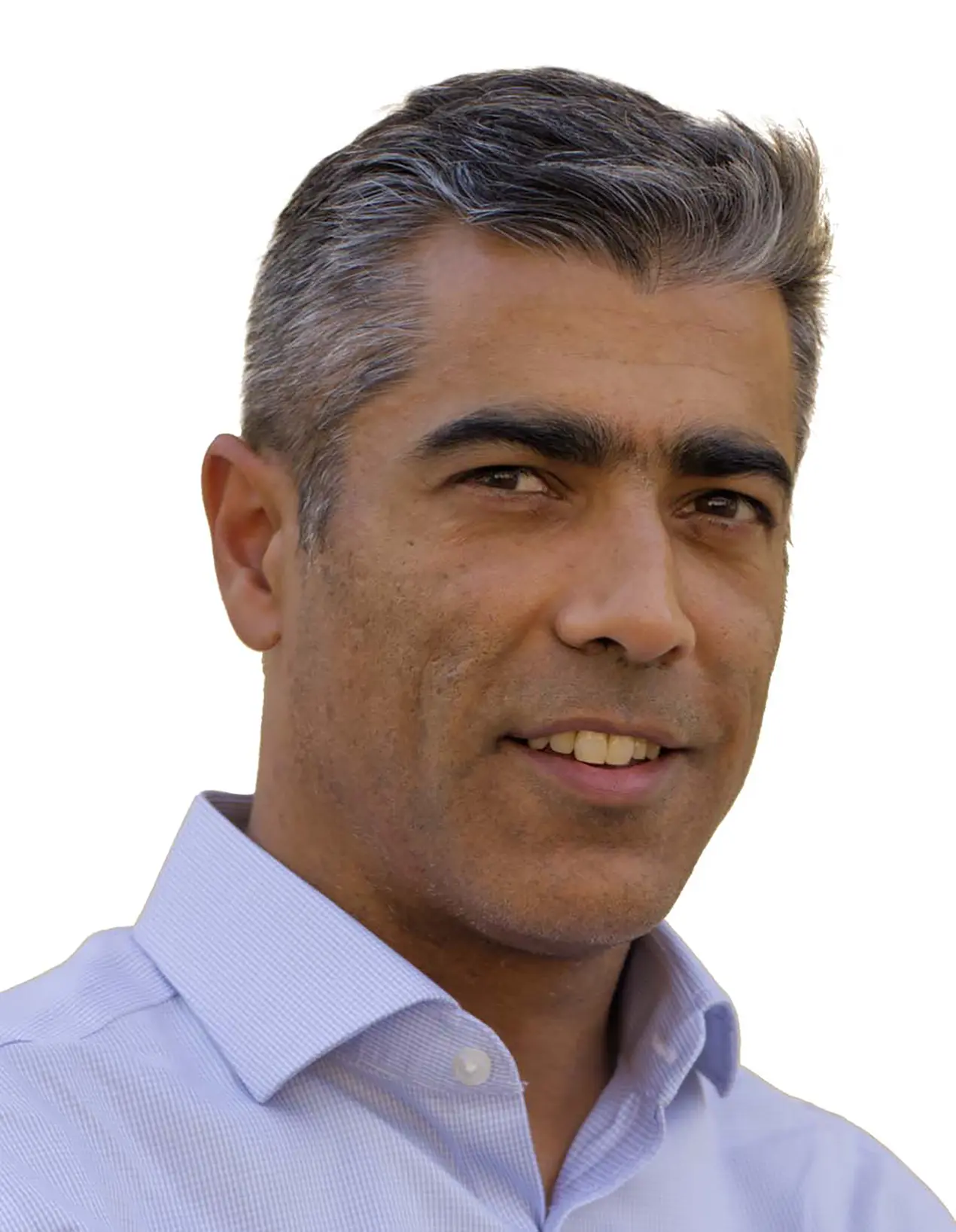
 Fr Isaac-El J. Fernandes SJJesuit PriestSociety of JesusJesuit priest working in Southern AfricaFr. Isaac-El J.FernandesSJ
 Dedication of the Lateran Basilica
Date: | Season: Ordinary Time after Easter | Year: C
First Reading: Ezekiel 47:1–2, 8–9, 12
Responsorial Psalm: Psalm 46:2–3, 5–6, 8–9
| Response: Psalm 46:5
Second Reading: 1 Corinthians 3:9c–11, 16–17
Gospel Acclamation: 2 Chronicles 7:16
Gospel Reading: John 2:13–22
Preached at: St. Ignatius Parish in Rhodes Park in the Archdiocese of Lusaka.
Today we celebrate the Feast of the Lateran Basilica. Now most of you have probably never even heard of this Basilica or this Feast. It normally occurs on a weekday, and in our Liturgical calendar, we know that when a saint’s feast falls on a Sunday, the Sunday liturgy takes precedence and that Saint’s memorial day gets skipped and will be celebrated the next year when it falls on a weekday. We might ask ourselves, why does this feast of a building, which should be theoretically less important than the feast of an actual saint, suddenly trump the 32nd Sunday of Ordinary Time?
Well the first thing to say is that although the Lateran Basilica is a building, we are not celebrating the building. What we are celebrating today is what the building represents. The Lateran Basilica is the Chair of the Bishop of Rome. You may be surprised to learn that the Bishop of Rome’s Cathedral is not in fact St. Peter’s Basilica, but the Lateran Basilica. It is true that most papal ceremonies are held at St. Peter’s, but this is because of its bigger size relative to the Lateran Basilica and its location within the Vatican itself. Nevertheless, the Lateran Basilica is still the official ecclesiastical seat of the Bishop of Rome. We do not often call the Pope the Bishop of Rome, but it is a healthy reminder to us all that the Pope is not a monarch or a king, but a bishop, and therefore a shepherd to a flock. What makes the Pope into the shepherd of the Universal Church is the fact that he is Bishop of Rome.
Since the days of the Early Church, the Bishop of Rome has been considered primus inter pares (the first amongst equals). The Church is therefore made of many flocks who are all united by their shepherds, by the Bishops, the successors of the apostles. The Bishops are united by the successor of Peter, the Bishop of Rome, who is the first amongst equals. In this way, the primary responsibility of the Pope is a ministry of unity, it is one of uniting all the faithful scattered throughout the world into one single flock. Ultimately, it is of course Christ who unites us all in our one Christian faith, but as humans we need concrete and visible signs of this unity.
Last month, a major split occurred in the Anglican communion, with GAFCON, a communion of Anglican Churches mostly from Africa and Asia announcing their rejection of the traditional symbols of unity of the Anglican Communion in the person of the Archbishop of Canterbury and the Lambeth Conference. The reason that GAFCON gave for this decision was that the Archbishop of Canterbury and the Lambeth Conference no longer upheld the truth of the faith. This was probably reference to the recent decisions to elect a female Archbishop of Canterbury and to recognize homosexual unions. Whatever our personal feelings are on the legitimacy of these two decisions, we must surely acknowledge the tragedy of a splintered Anglican Communion, that was itself a splinter communion from the Catholic communion. If there ever was any doubt before, this latest move by GAFCON finally puts a nail in the coffin of the idea that the Anglican communion exists as one global and united entity.
The Archbishop of Canterbury definitively now no longer represents global Anglicanism, and is now longer able to summon Anglican bishops to Lambeth Palace for conferences that will enable them to speak with one unified prophetic voice to the troubles and challenges of our contemporary world. When we look at the scandal of a fractured and broken Anglican communion, we as Catholics are called to give thanks for the very real unity that we share as a Catholic Communion. The Pope still does speak for the whole Catholic Church and represents in a concrete way the voice of Catholic and the Catholic faith in the contemporary world. It is this ability to speak powerfully and prophetically with one voice that we celebrate today. But it is not all doom and gloom for those who do not share in our unity as Catholics. I think that the first reading today invites us to share the benefits and graces of this unity with other Christians and with the world at large.
This idea of our unity as a Church is captured well by the image of the water that flows from the Temple in today’s first reading from the Prophet Ezekiel. We are told that the river begins, as all rivers do, as a small trickle coming out of the Temple and as it flows its course it gradually grows and becomes a torrent of water impossible to cross except by swimming. The water of the river is clearly the grace and life of God that flow out from the Temple into the world. However, it must surely strike us as odd that God’s grace is at its lowest ebb closest to the Temple and increases the further away it gets from the Temple. Surely it should be the other way round – the river should be a raging torrent of water gushing out of the Temple at its entrance and then slowly decrease to a trickle the further away it gets from its source as it is absorbed by the earth. How are we to understand this curious implication that God’s grace increases the further away it gets from the Temple.
It is almost as if there is a multiplier effect to God’s grace when it exits the Temple and goes out into the world, such that the further it goes out into the world and encounters the world – the more grace abounds. If we think of our Churches as being the modern equivalents of the Temple, then a good way to understand this metaphor is to imagine the congregation as they exit the Church after mass as the river of water that flows out of a Church. As we come to Church we are filled with God’s grace and then we are called to flow out as a river of God’s grace and to take the love and mercy of God to all who we meet. As each individual Christian encounters other people and passes onto them the love and mercy of God – they invite these people to become a part of the river. It is in this way that the river of God’s grace grows as it flows through the world, sweeping more and more people into its flow towards the sea of heaven. In this sense, God’s sanctifying of humanity is actually carried out in the midst of the world through us followers of Christ. In the words of Jesus, we are the yeast in the three measures of flour that makes the whole dough rise. The river of God’s grace can be swelled by people who are attracted to us because of the way we witness to God’s love and mercy. In the image that the prophet Ezekiel gives us, the river is a source of life for trees and all living creatures who never even have to come near the Temple in order to benefit from the salvation of God. It is a truly hopeful image for us who live in such a secular world to know that entering a Church is not the only way to access God’s grace.
Questions for reflection
- Am I in the habit of thinking of the Church as a building, as a physical location rather than a living, organic body?
- Where do I see in the world today the effects of God’s grace creating a ground swell of grace and transformation?