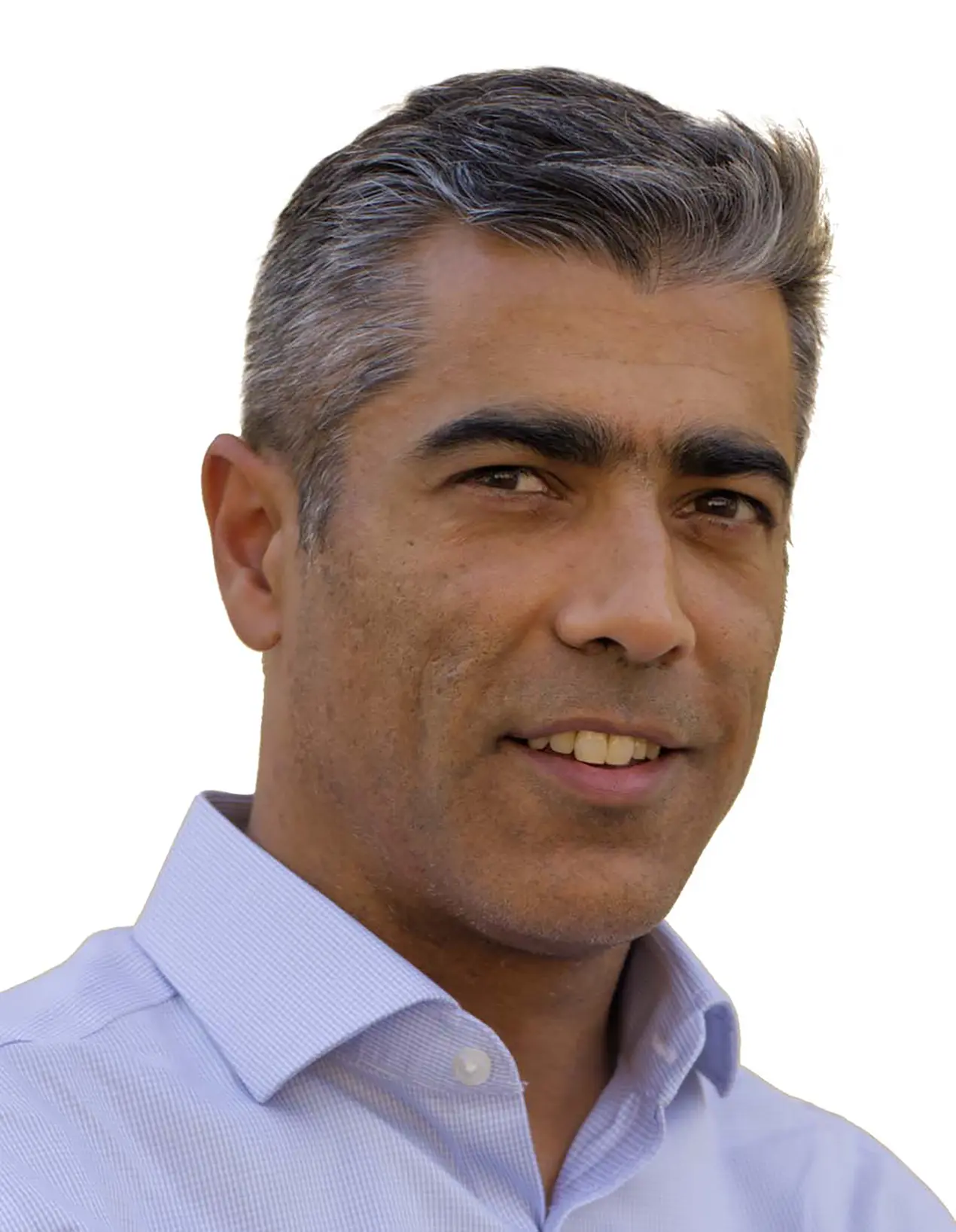
 Fr Isaac-El J. Fernandes SJJesuit PriestSociety of JesusJesuit priest working in Southern AfricaFr. Isaac-El J.FernandesSJ
 34th Sunday in Ordinary Time - Christ the King
Date: | Season: Ordinary Time after Easter | Year: C
First Reading: 2 Samuel 5:1–3
Responsorial Psalm: Psalm 122:1–5
| Response: Psalm 122:1
Second Reading: Colossians 1:12–20
Gospel Acclamation: Mark 11:9–10
Gospel Reading: Luke 23:35–43
Preached at: Brother from Another Father Podcast in the Archdiocese of Lusaka.
In 2017, the American jazz artist Gregory Porter won a Grammy award for his song “Take me to the Alley.” Its lyrics are hauntingly appropriate for the feast that we celebrate today: Well they guild their houses In preparation for the King With every sort of shiny thing They will be surprised when they hear him say
Take me to alley Take me to the afflicted ones Take me to the lonely ones That somehow lost their way
The lyrics of this song can certainly be applied to our modern generation as we deck out our malls and public spaces with Christmas decorations to celebrate the birth of our King. We may be guilding our houses and shops with every sort of shiny thing and then be surprised to hear our King point us in an entirely different direction. The picture we are given to contemplate of Christ as King in the gospel today is deliberately meant to shock us in precisely the manner that Gregory Porter sings about in this song.
We are meant to be shocked out of our mis-conceptions of Christ’s Kingdom. There are two particularly pernicious misconceptions of Christ’s Kingdom that I would like to deal with today. The first misconception is to think of Christ’s kingdom, and therefore Christ’s power as merely spiritual. This kingdom has no concrete manifestation in the world of raw political power, because worldly political power is merely transient, as we saw in last Sunday’s gospel. In this sense, Christ’s kingdom is the greatest, because the spiritual values that Christ espouses as King are eternal and will outlast any earthly Kingdom we know. This vision of Christ’s kingship is profoundly mistaken, because Jesus, as the Messiah, did intend to have a political power here on earth. Christ was crucified precisely because he represented a threat to the political powers that be, but not in the sense we might imagine, and herein lies the other mistaken view of Christ’s kingship.
This second misconception is the notion that God has simply given a stay of execution to earthly powers to have their time in the sun. In the end, God will come along and blow them all out of the water with God’s awesome power. This is the type of King that Jesus’ disciples and the crowds looking on expected Jesus to be, and the type of King that the soldiers and the chief priests mock Jesus for not being. For this is the only type of power that they understand: the power of the sword. This is why they jeer at Jesus and say to him, if you are really the Messiah, the King, then show us your power and come down off the cross, then we will believe in you. Sadly, many Christians still believe in a Christ like this. Many Christians want a God of miracles, a God who solves all problems with awesome power and might. It is true that the crowds and the chief priests would have believed if they had seen Jesus come off the cross and proceed to command hordes of angels from heaven to slay all those who had minutes ago seemed to be in control by the power of their swords. But what would this have done? It would merely have confirmed their false image of God – that God is a God of one-upmanship – that God is King because God is just a more powerful version of the earthly rulers that we know. On some level we know that God does not need guns and bombs and fighter jets to win wars, but we assume that God doesn’t need these things because God has the power to blow God’s enemies to smithereens with a mere thought – something like a super Darth Vader. We have made God in our own image and I think that on some level when many Christians celebrate with pomp and ceremony Christ’s kingship today – it is this awesome power of God that they are celebrating. But this is most definitely not the God who is revealed in Jesus on the cross. For many Christians the cross is just a hiccup, the unfortunate necessary price that Jesus had to pay for our salvation. What today’s liturgy invites us to realize is that Jesus’ Kingship is the Kingship of a Crucified God.
It is then no accident that the image that the Church gives us to contemplate on the feast of Christ the King is the image of the crucified one whose crowning moment of glory is a moment of intense weakness and vulnerability. Christ’s type of kingship is one that chooses not to impose its will on people. Christ is not interested in people simply doing the right thing out of fear. For this reason, I think we need to speak of a veiled kingship of Christ in our world today. Christ does have a political power, but is a soft power, and a hidden power, visible only to those, like us hopefully, who have understood something of Christ’s project in the world. For Christ’s mission is to win people’s hearts over, and the only way you can do that is through vulnerability. The only way you can change your enemy’s heart is by absorbing their hate and returning it with love.
For anyone who has ever had to lead a team, you will know how the power to effect a change of heart in your biggest detractors and opponents, the power to get them on board and turn them into your biggest supporters is like gold. You cannot buy that. Normally, when we encounter opposition in the teams that we lead, we have two options – that correspond to the two false models of Christ’s kingship. 1. The power of the sword – we crush them, we let them know who is boss and if they don’t get behind us 100%, there will be consequences. But we know from experience that this strategy often does not work. Often, all it does is to further entrench their opposition and their jealousy. 2. The Moral high ground: we think that if we outperform them, if we show them beyond any shadow of a doubt that our strategy is far more effective than their own, they will come round. This is the strategy of one-upmanship will at best only win us begrudging admiration, but never devotion or love.
Jesus wants to win the love and devotion of all his team, and his team is the whole of humanity. He knows that he can only do this by taking a big risk – the risk of the cross. In accepting the cross, Jesus is agreeing to submit to the power of coercion that they have, agreeing to submit to the power of the sword that they rely on and gambling that by absorbing all the hate they throw at him and responding with love they will come to realize that the sword does not bring victory, that the victory of the power of coercion is hollow. I think that this is what the second criminal on the cross next to Jesus realizes.
The profession of faith of this second criminal is really quite stunning, for when he tells Jesus to remember him when he comes into his Kingdom, there is no way that he knows that Jesus is the second person of the Trinity who is about to ascend his heavenly throne surrounded by angels and trumpeting cherubim. Such a view would be highly anachronistic and be imposing our idea of the Kingdom of heaven onto a first century Jew, a Jew who in all likely hood had up until he was crucified with Jesus only heard about Jesus through hearsay of other people. This bandit had lived his life by the power of the sword, all he had ever seen was the fear in people’s eyes as he robbed them. he was now on the receiving end of the same violent manner of living life – the full force of the power of coercion of the Roman army was now about to rob him of his very life. What goes around comes around. This was the only power he had ever known. But now in the last moments of his life, this bandit encounters a different kind of power. There is something about the way Jesus suffers, something about the way that he is vulnerable, absorbs all the hate thrown at him and transforms it into love that captures this bandit’s heart. For here was a power that this bandit was seeing for the first time – it was all the more incredible because this power seemed far stronger than the power of the sword. This bandit knew the smell of fear, he was used to seeing it in the eyes of his victims, and yet here he was shocked to see that there was no fear in the eyes of Jesus – he saw only love, and he also saw a purpose, an invitation to do the same to trust beyond death. We must remember that not all Jews believed in the afterlife – we cannot be sure that this bandit thought much about the afterlife – especially given the manner in which he had chosen to spend his life. But now it dawns on him that this cannot be the end of the story for such love, that such belief, love and power must have purchase someplace – and this is the place that he wants to be – he wants to be in this kingdom – where there is no more fear – because fear has been conquered, even the fear of violence and death itself.
Each time we decide to be the bigger person, we are placing ourselves in a vulnerable position. Each time we decide not to return a bad deed in kind, we have a veiled power. But as soon as we decide to make that power visible and point out to someone that we are being the bigger person, our power becomes coercive, and it is no longer the power of the cross. the silent witness of love. Ronald Rolheiser says that if you carry someone’s cross for them – don’t send them the bill. It is extremely hard for our world today to understand that kind of power, because we are so used to hard power, for it is hard power that gets the job done quickly and efficiently. But the transformation brought about through hard power is short-lived. It takes much longer for the soft power of Christ to get results, when it does get results they are enduring. Christ as King of this world in playing the long game and what we celebrate today is that ultimately Christ’s long game of vulnerable love will melt the hearts of the wicked and bring about lasting conversion.
Questions for reflection:
- Can I think of an event in my life where I have used the power of the cross to effect a change that cuts far deeper than any hard power?
- Am I hopeful that Christ’s power of vulnerable love will eventually win over the power of the sword/bomb in our modern world?