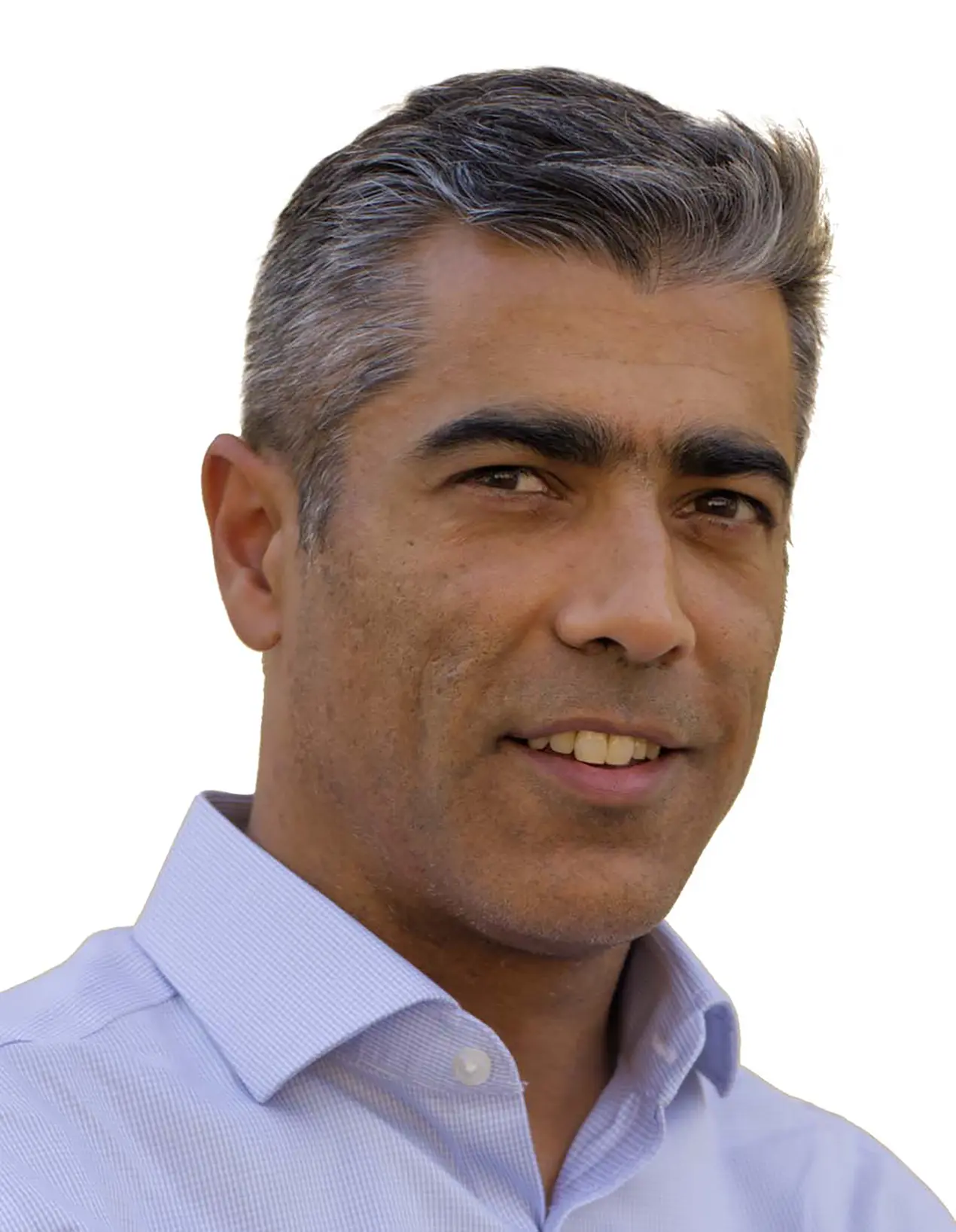
 Fr Isaac-El J. Fernandes SJJesuit PriestSociety of JesusJesuit priest working in Southern AfricaFr. Isaac-El J.FernandesSJ
 2nd Sunday of Advent
Date: | Season: Advent | Year: A
First Reading: Isaiah 11:1–10
Responsorial Psalm: Psalm 72:1–2, 7–8, 12–13, 17
| Response: Psalm 72:7
Second Reading: Romans 15:4–9
Gospel Acclamation: Luke 3:4, 6
Gospel Reading: Matthew 3:1–12
Preached at: St. Ignatius Parish in Rhodes Park in the Archdiocese of Lusaka.
Today’s gospel gives us the opportunity to contemplate the person of John the Baptist, whose ministry and preaching constituted a radical subversion of the established channels of authority. Firstly, we must remember that John the Baptist came from a priestly family. His father Zechariah was a Levite, and according to the expectations of the time, he would have been expected to become a priest like his father. But instead following tradition, John must have caused great consternation and indeed embarrassment to his family when he refused to become a priest and instead hived off to the desert where he began preaching against the authorities of the day and established a parallel structure for the forgiveness of sins. We need to remember that in second-Temple Judaism, there was only one sanctioned protocol for the forgiveness of sins, which resided in the sacrifices made by the priests in the Temple on behalf of the people. But here was an upstart member of the Levi family who had not only shunned the priesthood, but was now creating a sensation by offering the people another way for the forgiveness of sins. Moreover, the symbolic value of where John decided to exercise his ministry should not be lost on us. We are told that John set up shop on the far side of the Jordan, in other words, John was outside of the promised land. We can only speculate and fill in the gaps from the context of John’s preaching, but it is highly likely that John considered the Temple cult thoroughly corrupted. He had probably come to the conclusion that because Israel had been so unfaithful to keeping the covenant that the promises of God were no longer operative. Indeed, Israel had strayed so far from God’s intentions that it was necessary to begin again – to leave the promised land and go back into the desert in order to hear anew God’s invitation to covenantal fidelity. The heart of John’s message would seem to be a critique of the entitlement that has led to complacency on the part of the spiritual and political leadership of the people, the Sadducees and Pharisees who take solace in the fact that they have Abraham for their father. John warns them that this attitude will not get them far. He urges them to produce good fruit as evidence of their repentance.
If we look at our own current situation, we cannot deny the fact that on many levels our Church is in dire need of reform. Pope Francis has spoken of this many times, and has pointed to the pernicious sickness of clericalism that afflicts our Church. This sickness is not very dissimilar from the ills that afflicted the institutions around the Temple and the Jewish leadership at the time that were so roundly condemned by John. At the heart of clericalism lies a certain smug self-satisfied conviction that as ordained ministers of the Church, we priests and bishops have the fullness of the means of salvation and therefore cannot be wrong or make errors in judgement. It is this attitude that Pope Francis roundly condemns when he talks about clerics who would rather be a “general of a defeated army than a mere private in a unit which continues to fight.”
For too long now the Church, has been content to dish out ready-made answers that smack of a haughty self-assurance of those who have already arrived. The Church has been all too eager to force-feed people cookie-cutter answers drawn from our catechisms and church documents written from a position of privilege and authority by people who often have little contact with the existential drama of the life of the everyday man and woman. One of the most dramatic changes that the Second Vatican Council introduced into our way of seeing the Church was to move away from talking about the Church as “perfect society,” a static image and instead favor a more dynamic image of the Church as a pilgrim people, filled with longing and expectation. This would also be a Church that is unafraid to confront the difficult questions of our times, knowing that it might not have all the answers to such questions.
What would be some of these questions? Well for starters, I think that our pastoral care of the LGBT members of our Church. For too long now the Church has claimed to have all the answers on human sexuality and has set out a very black and white vision of what a normative, fulfilled and moral sexuality must look like. I think that the LGBT community should prompt some humility from us as a Church to take the time to listen to their experiences and then journey with them as together we acknowledge that the question of human sexuality is far more complex and multi-layered than official Church teaching would lead one to believe and that together we are called to journey with LGBT people who ask the question of what a fulfilled sexuality looks like. I think that with his recent statement on homosexual civil unions, Pope Francis is opening the door for us as a Church to begin to ask these questions.
In reflecting on the current status of our Church, Michael Simone SJ has proposed that we need to become a Church of questions, rather than of answers. He begins his article with three statements “1. Scrawled on a wall: “Jesus is the Answer!’. 2. Scrawled below it: ‘OK, but what is the question?’ 3. A statement attributed to the great theologian Karl Rahner: ‘The Christian of the future will be a mystic or he will not exist at all.’” For far too long now, we have been wedded to a Church of answers. It is worth remembering that our Church, thinking it knew all the answers, persecuted Galileo and silenced him for teaching that the Sun was at the centre of our solar-system. Four hundred years after this incident, the Church, realizing that it has been on the wrong side of the truth in this debate, publicly apologized. St John Paul II conducted a Day of Pardon ritual in the Jubilee Year 2000 to humbly ask pardon for all the past sins of the Church. Perhaps this is part of what it would mean for us as a Church to leave the promised land, so that we might re-enter it as a renewed people. As Christians we should be people who are able to hold their questions and remain in a liminal space without succumbing to the temptation to manufacture quick easy answers. John the Baptist was able to remain in a liminal space – of realizing that the Kingdom had not yet come but longing so much for it, that his whole life was given over to this longing. We have very little capacity for staying in the liminal space of longing. Every Advent we need to take the opportunity to figuratively leave our promised land, the place that we have got comfortable in our Church and go on a quest into the desert to reconnect with our yearning for a fullness of life.
Question for reflection
- In what ways have I become complacent in my Church community or in my status as a Christian?
- What would exiting “the promised land” of my own manufactured salvation look like for me?
- Am I in touch with people who seem to be on a pilgrim journey, searching for something and unwilling to be satisfied with ready-made neat answers?