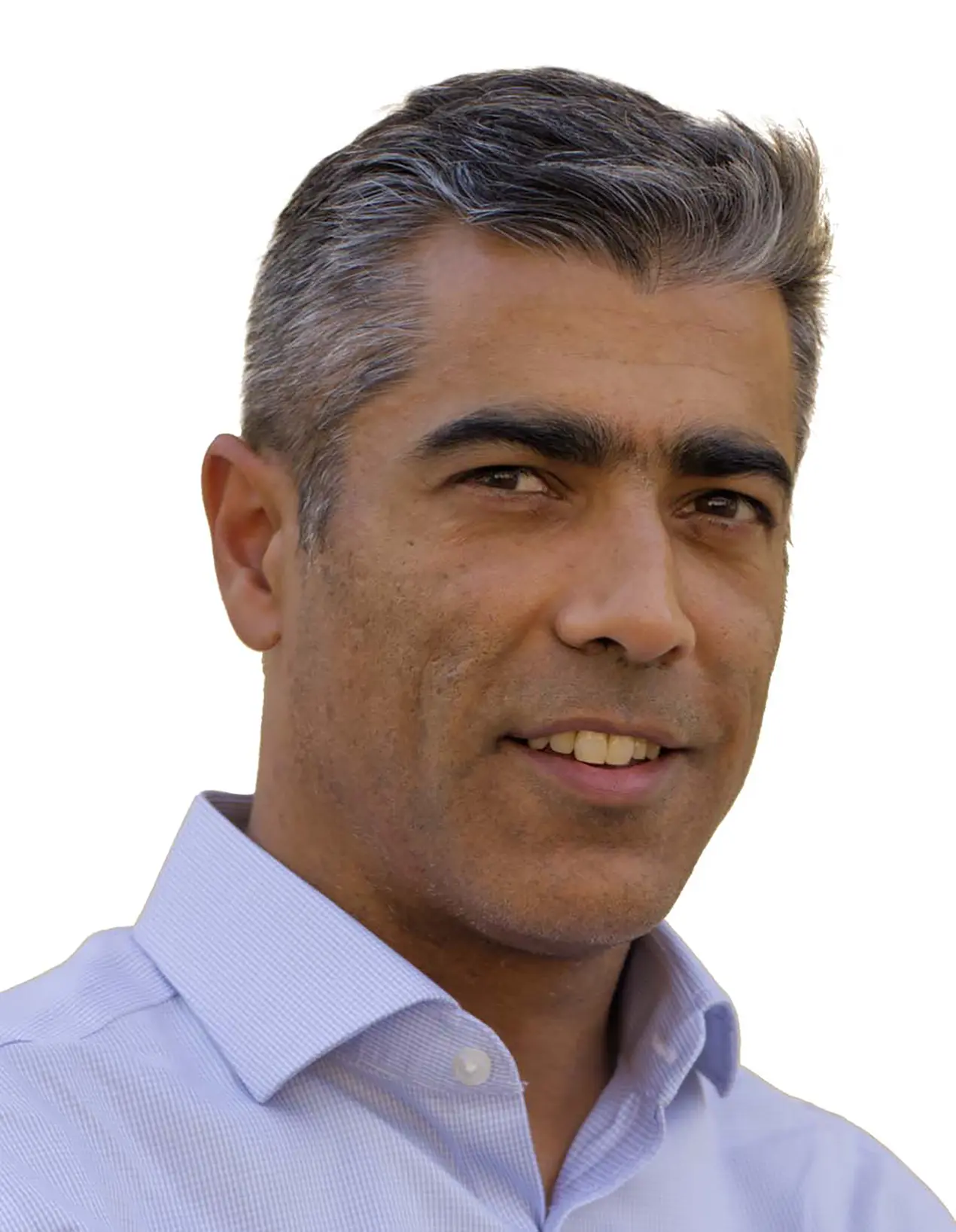
 Fr Isaac-El J. Fernandes SJJesuit PriestSociety of JesusJesuit priest working in Southern AfricaFr. Isaac-El J.FernandesSJ
 3rd Sunday of Advent
Date: | Season: Advent | Year: A
First Reading: Isaiah 35:1–6a, 10
Responsorial Psalm: Psalm 146:6–10
| Response: Psalm 35:4 or Text
Second Reading: James 5:7–10
Gospel Acclamation: Isaiah 61:1
Gospel Reading: Matthew 11:2–11
Preached at: St. Ignatius Parish in Rhodes Park in the Archdiocese of Lusaka.
In today’s gospel we see John having doubts about Jesus and sending his disciples to Jesus to ask if he is indeed the one who is come or if they should expect another. What might have occasioned these doubts on the part of John the Baptist? We might get clue from looking at the difference between his preaching and the preaching of Jesus.
John the Baptist’s preaching was what we might characterize as a fire a brimstone preaching, but with one critical difference. In the standard fire and brimstone sermon, the congregation is urged to repent by the preacher or risk facing the righteous judgement of God when they die and be sent off to face an eternity of unthinkable torment and pain in the fires of hell. The difference with John’s preaching was he believed that this judgement of God was right around the corner. We had an example of this in last Sunday’s gospel, where we heard John saying: “even now the axe lies at the root of the trees.” For John, God’s judgement was not something that each individual would encounter at the end of their earthly life. Instead, God’s judgement would happen in their lifetimes, and would happen on a great and terrible day, where the righteous would be vindicated and where all those who had not repented would be thrown like chaff into the fire. The person who would accomplish this would be the Messiah, who with his winnowing fork would separate the wheat from the chaff.
So when John announced Jesus as the Messiah, this is what he was expecting Jesus to do. But instead of unleashing God’s righteous judgement on all sinners, Jesus was proclaiming God’s mercy. This is what had John confused and wondering if Jesus was indeed the Messiah, or if they should expect someone else. John’s question to Jesus could be paraphrased in this way “if you’re not the one raining down fire on sinners, then should we be expecting someone else to come and along and do this?” Even in prison, John would have heard that instead of Jesus bringing a swift end to this adulterous generation, he was joyfully wining and dining with tax collectors and sinners and telling them there was a place at the table for them in God’s Kingdom. This would have been very perplexing to John and to his disciples and this is the sense behind their question to Jesus in today’s gospel.
Pope Benedict XVI, when he was still Cardinal Ratzinger has a beautiful reflection on the gospel of today. He talks about John the Baptist’s expectations of the Messiah in terms of finally getting certainty. The certainty he longed for and expected the Messiah to bring had several levels:
- Certainty about who was in and who was out: This is the whole point of his image of the Messiah as one with a winnowing fan separating the wheat from the chaff. John expected the Messiah to bring God’s judgement so that it would be crystal clear who were the sinners and who were the righteous.
- Certainty about his own vocation: Each one of us, in our own lives has known moments of self-doubt, moments where we are not quite sure if we are really fulfilling our calling in life, or whether we are just on a wild goose chase. It would have been the same for John, there would have been moments where he would have asked himself if his expectation of a Messiah was all just his own delusional dreaming. For, when the Messiah would come he would announce himself clearly as the Messiah, and this would give certainty to John about his own vocation, that it had not been in vain.
- Certainty about the direction of history and God’s redemption: John longed for an end to the ambivalence of life, the waiting and hoping in darkness for God to act. He wanted certainty about the direction of history and the certainty about where the hand of God was acting the events he saw around him. But John, just like us, doesn’t get this certainty. For Jesus doesn’t come and clearly state who’s in and who’s out. He leaves this ambiguous, and tells parables to try and get people to repent and understand that the Kingdom of God is quite different from what they were expecting. Jesus doesn’t announce to everyone that he is the Messiah, he also leaves this ambiguous and prefers to speak of himself as the “Son of Man” – a cryptic figure from the book of Daniel. For John, on many levels, if Jesus was indeed the Messiah, he was something of a disappointment, because not only de he not rain down fire on the bad guys, his ministry did nothing to remove the ambiguity that characterizes our world. “Human life continued to be an obscure mystery that one has to pursue with faith and hope into the world’s darkness.” Jesus tells John to discern by looking at the fruits of his ministry: “the blind see again, the lame walk and the Good News is proclaimed to the poor.” This is the task of any Christian and we can never get hold of any certainty that absolves us of having to make this kind of discernment.
The thing about Advent is that it teaches us to deal with ambiguity, and teaches us about our expectations. Advent is all about learning to walk in the darkness and managing our expectations and testing them against the reality of our lives. John could have allowed himself to escape into the world of fantasy, or perhaps given up on Jesus and started hoping for someone else. But he did not, he accepted the challenge, and rose to it, the last challenge that God was now issuing him, he who had spent his life telling others of the need for repentance and metanoia was now being asked by God to allow himself to be changed and transformed by his encounter with the messiah. He was being challenged to accept that this is what salvation and redemption looked like. We have celebrated Jesus Christ as our Lord and savior for so long, King of the Universe that we forget what a disappointment he must have been to someone like John who was expecting fire to rain down from heaven.
In the mundane everyday circumstances of our lives, we are also tempted to ask God, “Lord is that all you’ve got for me?” you call this redemption, you call this salvation, this is not what I’ve been waiting for – this is not what I’ve been praying for. We might be tempted to ask God to send us a sign, so that life is not so ambiguous – so that it becomes crystal clear the way God wants us to go. But life is rarely that simple and we are called to engage in discernment. Like John, Jesus invites us too to look at where our world is bearing fruit, where the poor are having the good news proclaimed to them, and know that this is a good place to start looking for the finger of God acting in our world.
There is another lesson in today’s gospel for us too. John didn’t have the whole picture, he got some things wrong, his image of God and his preaching were perhaps a bit too harsh and unforgiving. He didn’t quite understand the precise form that God’s intervention in the history of Israel would take. But that does not matter, he served his purpose. We don’t have to have the whole picture in order for God to use us. God’s plans succeeding does not depend on us being perfect and having everything figured out. Let us be grateful therefore that our God can write straight on crooked lines and use us in spite of our doubts, errors and foibles.
Questions for reflection
- Do I find myself demanding greater certainty in my life from God and from others? Could this be a sign of my spiritual laziness: a desire to avoid having to engage in discernment?
- Do I wish that God would simply judge evil-doers, punish them and get them out of the way? What does God’s patience with evil-doers tell me about who God is?