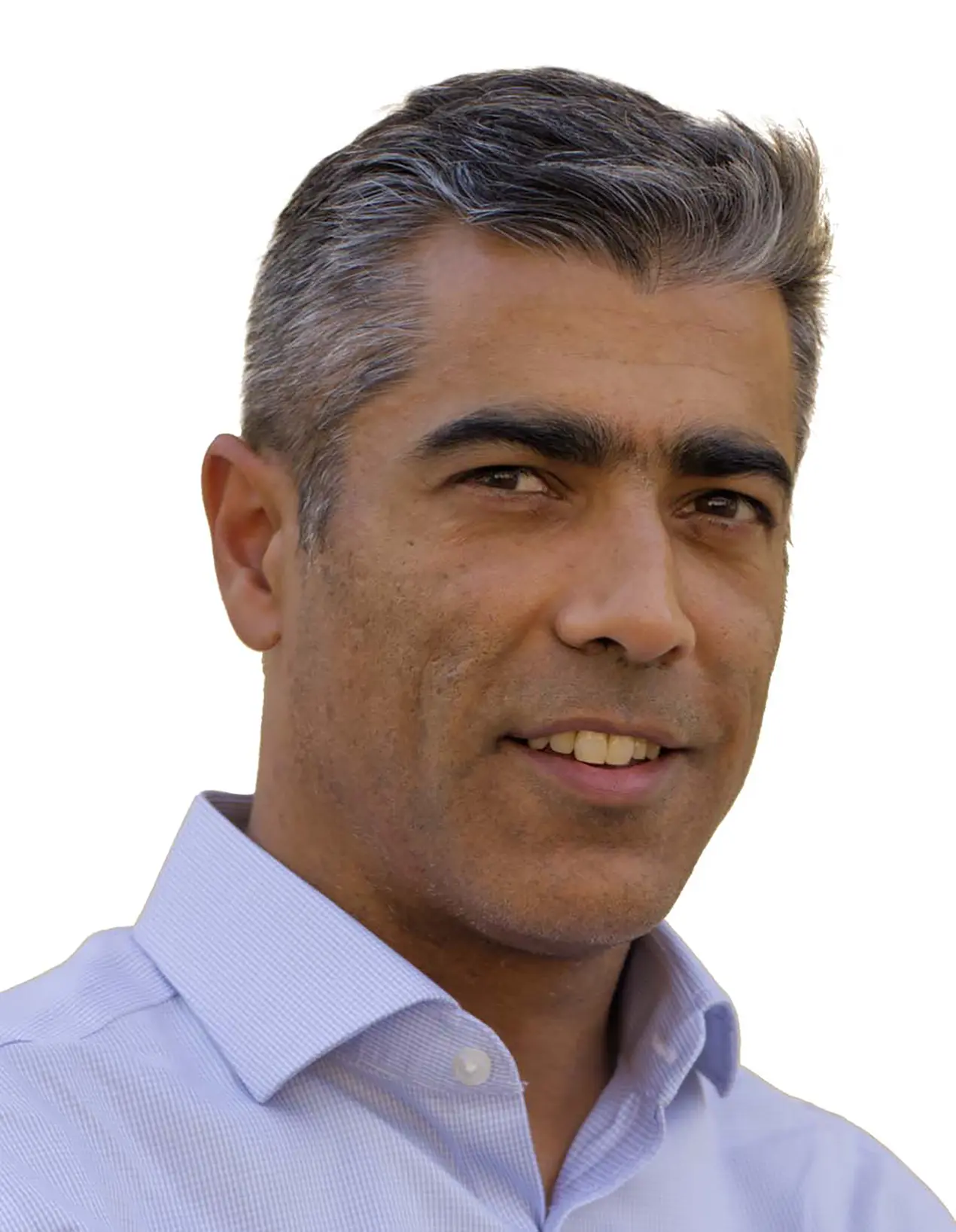
 Fr Isaac-El J. Fernandes SJJesuit PriestSociety of JesusJesuit priest working in Southern AfricaFr. Isaac-El J.FernandesSJ
 5th Sunday in Ordinary Time
Date: | Season: Ordinary Time before Easter | Year: A
Preached at: St. Ignatius Parish in Rhodes Park in the Archdiocese of Lusaka, Zambia.
The French Dominican writer, Christian Duquoc, has a penetrating insight which argues that good is actually often the cause of evil. To prove this point he cites the many well-intentioned NGOs who try to go about saving the world, but end up, even in the cases where they have some small success, by leaving carcasses of many failures and dependencies in their wake. Their headstrong efforts to produce good, to reform society and stamp out evil often leads to a backwash of rejected, destroyed and outcast people. Duquoc then uses this example to reflect on what he calls Jesus’ “parsimony in doing good.” Jesus did not heal all the sick people in Palestine nor did he drive out all the demons and cure all the possessed. Instead, Jesus only left signs. Jesus was ushering in a new way of doing good, by creating enough hope in the system for people to believe in a fundamentally good universe where death does not have to be feared anymore. In order to do this, Jesus did not have to abolish all death and all evil, just do enough good to get people to be convinced that death and evil will not have the final word.
James Alison, another Dominican theologian uses Duquoc’s reflection on Jesus’ parsimony in doing good to advance his own theory of the Kingdom that Jesus was trying to establish: “That is to say, the creative activity of God in the midst of the world is subjected to realizing itself as sign of something not available within the world as we know it. Were it available in “heavy” fashion, then it too would immediately be distorted by vanity and become another exercise in righteousness producing evil.” Alison’s insight cuts to the heart of the tragedy that was Christendom, which endures in many Christian hearts till today. At the height of Christendom, the Church believed it had a “heavy” version of the truth and salvation – instead of just a hint of it.
There was a time, at the height of Christendom, when it was conceivable that as the Christian empire expanded, it would one day be possible that the whole world would be Christian. There are still some Christians who hold such a vision, and dedicate significant energy and resources towards the realization of this goal through various evangelization drives and programs. They wish to establish a “heavy” version the salvation that Jesus came to bring. They are not content with signs and pointers to the coming of the Kingdom. It should surely give us pause that the image that Jesus uses in today’s gospel of salt and light present the Christian community as being very much a minority group. Just as only a few grains of salt are needed to flavor food, all that is necessary for God’s Kingdom to arrive here on earth is that a few people be prepared to witness to the values of the Gospel. Now I want to add a caveat here, before anyone should get the wrong idea – I am not saying that we should not evangelize. Evangelization is a crucial part of being Christian, but that is a homily for another day. For today, the gospel invites us to see how we as Christians, even though we are numerically few can be catalysts for bringing about a transformation of society that sees God’s will done everywhere.
There many ways in which we can be salt and light for the world. I would like to suggest just two today and illustrate them with two examples. The first way we can be light is by being people of prayer and sharing the peace and tranquility that come with that prayer with those around us. The example I wish to give of this is a small town in which a young boy committed suicide. The members of the town were so shocked by this suicide that they decided to hold a candle-light service as a way of supporting the young boy’s family in their time of grief. After the service, two parishioners from the Catholic parish in the town went up to the grieving family to assure them of their prayers and support. Having heard that the family had no known religious affiliation, they offered up their Catholic Church as a venue for the family, if they would like to have a prayer service.
I think that this is precisely what it means as a community to be salt and light. It reminds me of a poem by the Irish poet W.B. Yeats: “We can make our minds so like still water that beings gather about us that they may see, it may be, their own images, and so live for a moment with a clearer, perhaps even with a fiercer life because of our quiet.” I think that this is a good metaphor for the attraction of a Christian community and the service that we can provide those in our community who for one reason or another do not have a faith community. We can make our Church, our community so like still water – a place of peace and tranquility – that people might come to us – seek us out that in the space of our welcome and our peace, they might work through the confusion and the mess, the tragedy of their own lives – that they might live for a moment with a clearer, perhaps even with a fiercer life because of our quiet – because of our faith and our hope. Just as our community might be this place of stillness and peace where others can come and find the tranquility they need to work out the confusion and distress of their lives, so too as individual Christians, I think that part of being salt and light is being these oasises of peace and tranquility in midst of the world.
Another way in which we can be salt and light is by being people of hope. We must be prepared to trust in the basic goodness of people. Just as we say that it only takes one bad apple to make the whole barrel of apples rotten, I think in a similar way, it just takes a few people to be people of hope, people who trust in the goodness of humanity in order to turn a community into a place of trust. The example of this I would like to take is that of a Jesuit priest in Los Angeles who I’m sure some of you have heard about, Fr. Greg Boyle, who is the founder of Homeboy Industries, a highly effective program that is responsible for helping transform the lives of thousands of former members of LA’s notorious gangs. When Fr. Greg first came to Dolores mission, a Jesuit parish in the heart of LA’s most notorious gang-land, people scoffed at his naiveté in thinking that is was possible to convert gang members. Here was one solitary individual who believed that it was possible for these young men who lived their lives in the fast lane of drugs and gang-banging to reform their lives and make a positive contribution to society. It was Fr. Greg against an ocean of cynicism and a mountain of statistics that said otherwise. But his belief in the good that dwells in each person paid off and over the years Homeboy Industries has offered a way out of the toxic lifestyle of gangs to thousands of young men and women by providing them with an honest job and a community that believes in them.
There is one story that is particularly poignant that Fr. Greg tells of a young gang member named Pedro. Pedro came from a broken home. Filled with the resentment and bitterness towards life, Pedro sought refuge in the bottle and with time the bottle morphed into heavy drug abuse. Every day, Fr. Greg would see Pedro and offer to take him to rehab – Pedro would always politely decline the offer, until one day, after many such offers were declined, he agreed and let Fr. Greg drive him to the rehab. Thirty days into Pedro’s rehab, Pedro’s younger brother, who was also struggling with drug abuse, but hadn’t summoned the courage to go into rehab like Pedro, succumbed to despair and committed suicide. Fr. Greg drove out to the rehab center to go and pick Pedro up for the funeral – and when he got there he found someone wracked with grief, but this time not seeking to escape reality but prepared to stay there, trusting that it is only in the real that he will find salvation. As they drove together in the car, Pedro recounts to Fr. Greg a dream the night before, where it was just the two of them sitting in a room that was completely dark and empty, except for the two of them. Even though it was pitch black, and even though they do not speak, Pedro had a sense that Fr. Greg was there. Then Fr. Greg takes a flashlight out of his pocket and turns it on, and focuses the beam of light on the light switch of the room. Even though they still do not speak, Pedro knows that it is only him who can turn the light on. Trembling he follows the beam of light and arrives at the light switch, taking a deep breath he flips the light and the room is filled with light. At this point, Pedro is sobbing as he tells Fr. Greg about his dream, and he turns to him and says with a voice of having made an astonishing discovery “And the light… is better … than the darkness.” He says this as if he never knew this to be the case. There are some people who prefer the dark because they have never truly experienced the light.
This is our vocation, when we remain committed to the real with all its twists and turns and dark alleys, and yet remain full of hope both for ourselves and for others – we are light. We are the flashlights that point to the light switch, wherever the Lord has thrown us – in our families, circle or friends, workplaces – we are called to fight the cynicism that says that people cannot and do not change. We are called to hope in people who have given up on themselves. In this way we shine a light to their own light switch, to them having the courage to believe in themselves and believe in life. May the Lord give us all the grace today to be filled with the hope that God’s call has for us that we may be lights to other people who just need someone to show them the light switch in their lives.
Questions for reflection
- Who are the people in my circle who may need me to be the flashlight that points them to the light switch?
- How can I make my life “like still water” so that I can afford others the peace and tranquility they need to work through the trauma of their own lives?