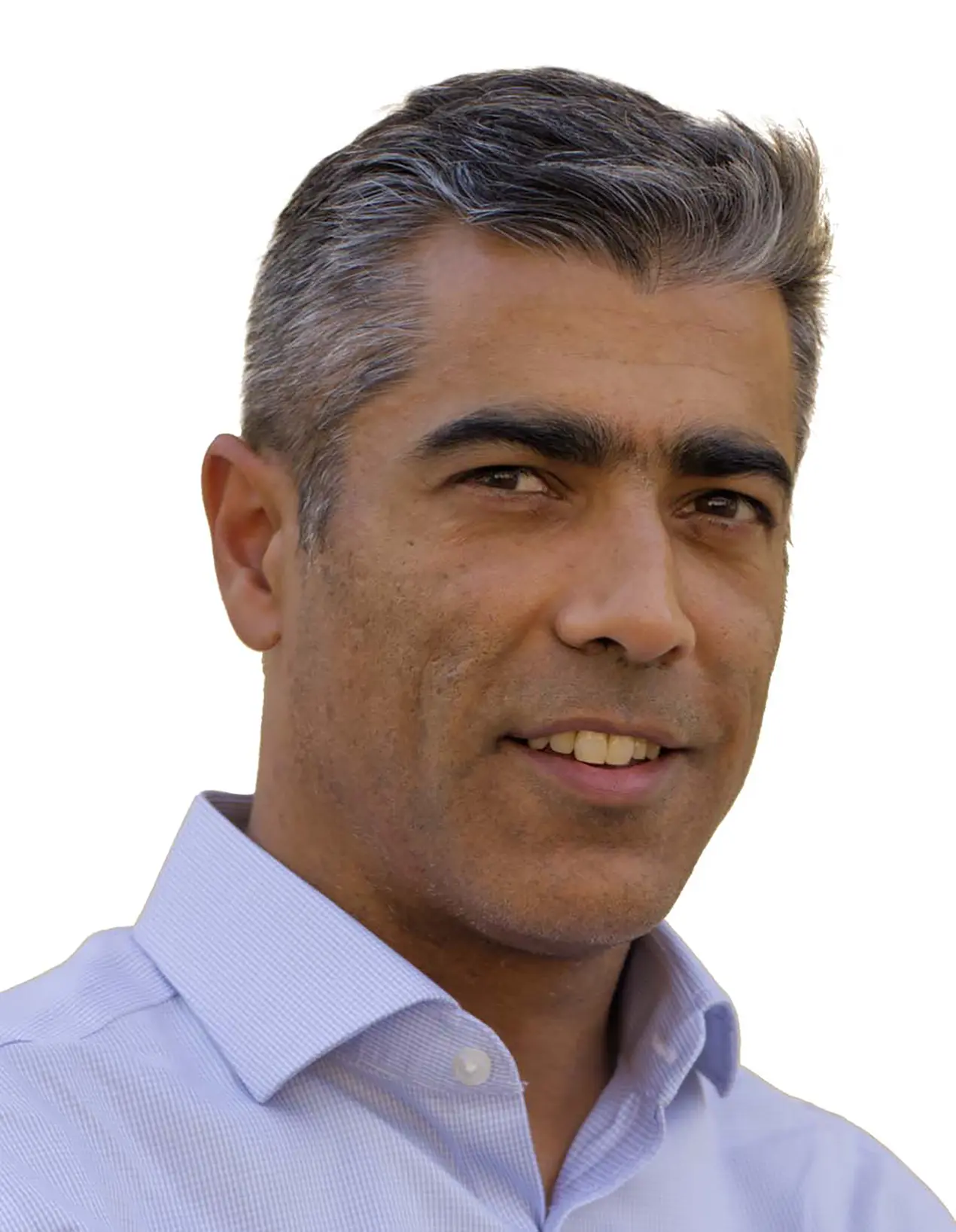
 Fr Isaac-El J. Fernandes SJJesuit PriestSociety of JesusJesuit priest working in Southern AfricaFr. Isaac-El J.FernandesSJ
 6th Sunday in Ordinary Time
Date: | Season: Ordinary Time before Easter | Year: A
Preached at: St. Ignatius Parish in Rhodes Park in the Archdiocese of Lusaka, Zambia.
The everything bagel on the surface of things seems like a good invention. Why should we have to choose between having a bagel with sesame seeds or poppy seeds or onion flakes or garlic flakes or pretzel salt, when we can just have a bagel with every one of these things. The everything bagel – invented so that we don’t have to choose. Wonderful – or is it really. Could we not actually see it as a sad commentary on our contemporary generation that is unable to choose, that does not like the idea of opportunity cost. We don’t do very well with choice as moderns, whether it’s our inability to make simple choices like what kind of bagel to have, or according enormous importance to relatively meaningless choices, epitomized by the reflections of Joe Fox in the movie You’ve got Mail “The whole purpose of places like Starbucks is for people with no decision making capacity whatsoever to make six decisions just to buy one cup of coffee: Short, tall, light, dark, caf, decaf, low-fat, non-fat, etc. So that people who don’t know what the hell they are doing, or who on earth they are can, for $2.95, get not just a cup of coffee, but an absolute defining sense of self: Tall, decaf, cappuccino.” Indeed one of the lines of Starbucks is “happiness is in your choices”
Our first reading today invites us to reflect on the importance and necessity of being able to make a choice. We are told by the author of Sirach that God has laid out before us: “People have life and death before them; whichever they like better will be given them.” We are told that whichever we prefer between life and death will be given us. This seems like a no-brainer – of course we all want life, so it should be simple, we should simply reach out and choose life. The problem is that the choice is not presented to us as one between death and life. If it was it would be all too easy. Instead, what we must chose between is “fire and water.” Our first reading tells us that the choice between death and life manifests itself as a choice between fire and water. Ronald Rolheiser, a celebrated spiritual writer notes how in religious symbolism fire and water have always been two opposing but central forces in life: fire symbolizing passion, energy, eros and water symbolizing a cooling down, a holding in containment, a time for reflection, withdrawal into peace. Mythically, spirituality is seen as an interplay between these two elements – fire and water. When God sets before us a choice of fire and water, God is not telling us to choose one or the other permanently. In a given moment, we are to choose one or the other, depending on what we need in that particular moment in order to grow as a people. There are times in our lives when we will need to choose fire. These are the times when we find ourselves feeling washed out and risk losing our purpose. It is at these times that we need to be enflamed with passion, we need to rediscover the reason we get out of bed in the mornings. Other times there is too much passion, there is too much going on in our lives, not enough quiet and time to integrate and we are threatened with disintegration. Any spirituality will involve a healthy alternation between these two drives.
Soren Kierkegaard talks about a saint as the person who can desire the one thing. We return here to our conundrum of the everything bagel - our inability to choose one thing results in dissipation. Because this is the problem – as Ronald Rolheiser says “we want to be a saint, but we also want to feel every sensation experienced by sinners, we want to be innocent and pure [water], but we also want to be experienced and taste all of life [fire], we want to have the depth afforded by solitude [water], but we also don’t want to miss anything [fire], we want to pray, but we also want to watch television, read, talk to friends and go out.” How do we manage this all – how do we find integration in all of this – how can all our choices lead us back to the one thing that we desire – God. This is the challenge of choice. It is easy to see how, when confronted by such momentous choices, we might want to flee from them and take refuge in the mindless choices of a what type of coffee to order in the morning. To shy away from these choices, to lose ourselves in the pettiness of the superficial choices of a consumerist culture is in effect to choose death, this is to die inwardly – either from a lack of fire, too much water [no risk]. Our reading tells us “People have life and death set before them, whichever they like better will be given them.” I find this truth expressed in God’s Word very revealing – because what it means is that we don’t actually choose life or death – we are told that given whichever we like better. But how do we indicate which one we like better? We indicate it by the choices that we make, by our ability to integrate both fire and water in our lives. These are the daily choices that we make. Do I go out with a friend, or do I stay home and pray? And remember, that on a given day, maybe the right choice will be to go out with a friend, and on another it will be to stay home and pray or read a book that leads me into interiority. Starbucks does is indeed have it right – happiness is in our choices – but happiness doesn’t come merely from the fact of having a choice – it comes from making the right choices, it comes from choosing life over death. Happiness comes as a by-product of having chosen God.
What is essential to making good choices is the quality of our freedom. Here again, I think our contemporary notion of freedom might lead us astray. Jean-Paul Satre, the French existential philosopher has a striking image of freedom that corresponds to our contemporary idea of what it means to be free. He used the image of a person walking down a forest path – and suddenly came to a fork in the road. As the person stood poised trying to decide with of the two paths to take – he was free, but as soon as he had taken a decision and chosen one over the other – he was no longer free – he had lost his freedom. But freedom is not the capacity to simply choose between two or more competing options. In our Christian tradition, Thomas Aquinas defines freedom as the capacity to choose the good. Often when we choose the bad, we are really not truly free. Rather we are acting out of a compulsion. Our freedom has been compromised, we are unable to see and choose the good for what it is. This is where today’s gospel comes in by helping us see that often the choices that lead us to death begin as barely perceptible attitudes in our heart that gradually grow until we are consumed by them. The person who commits murder or adultery is not really a free person, indeed one could almost say that their freedom has been so corrupted as to be non-existent.
This is why Jesus wants us to be able to pinpoint the minute that we go off track as being that minute in our hearts where we let anger or lust get the better of us. Long before we get to the stage of committing serious sin, we need to realize that our freedom is engaged in the small little battles against anger and lust and this is where important choices must be made in order to ensure that we do not fall into the prison of hatred and lasciviousness. As we approach Lent, let us pray for the grace to preserve our freedom by making good choices that lead us to life.
Questions for reflection
1. Am I sensitive to the importance of the alternation between fire and water in my life so as to grow as a person?
2. How comfortable am I with the notion of opportunity cost, with naming the sacrifices that I make in choosing one thing over another?