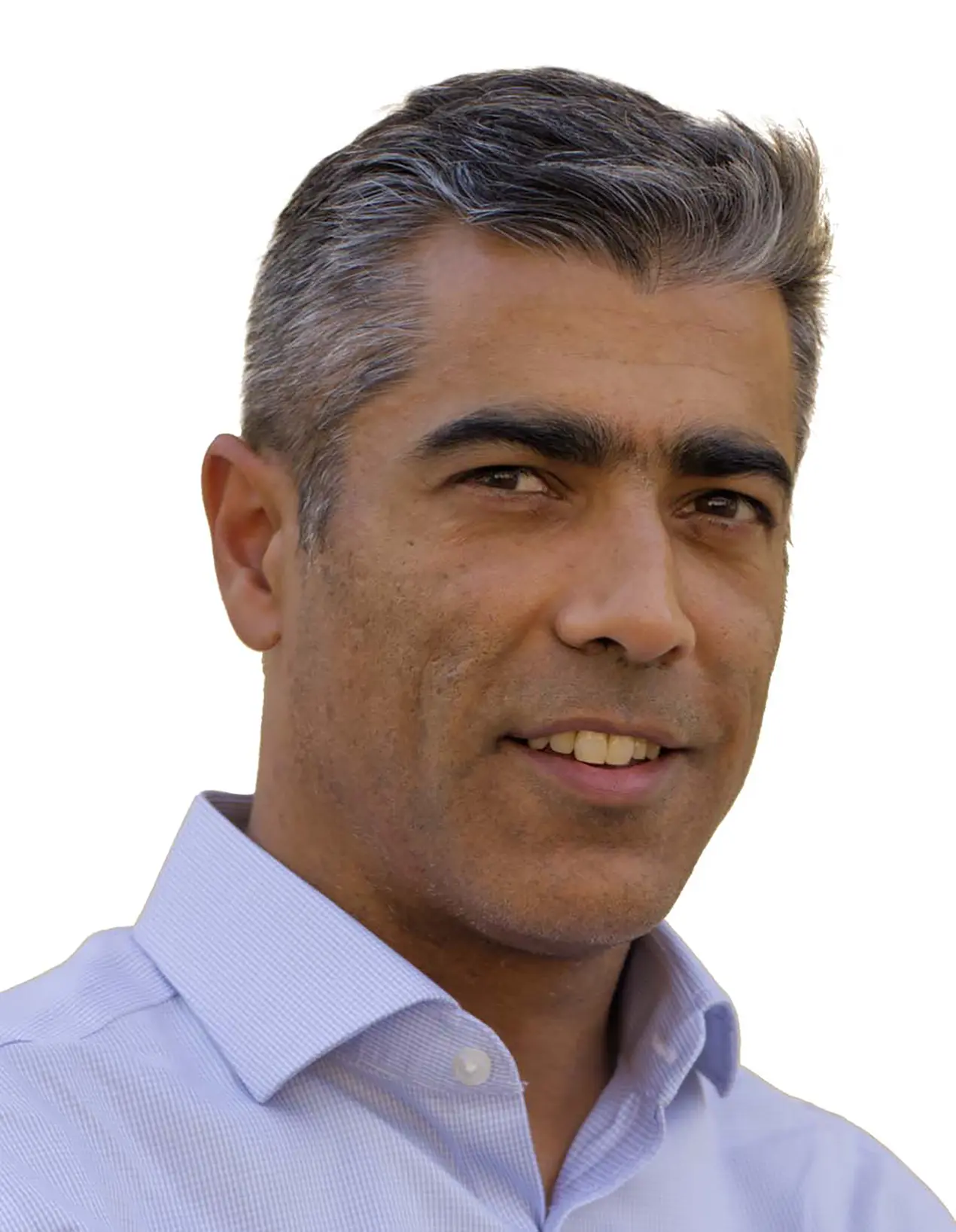
 Fr Isaac-El J. Fernandes SJJesuit PriestSociety of JesusJesuit priest working in Southern AfricaFr. Isaac-El J.FernandesSJ
 2nd Sunday of Lent
Date: | Season: Lent | Year: A
Preached at: St. Ignatius Parish in Rhodes Park in the Archdiocese of Lusaka, Zambia.
Richard Rohr, a Franciscan priest and widely acclaimed spiritual writer, brought out a book a few years ago, entitled “Falling Upwards.” His main thesis in this book is that life is divided into two halves. The first half of life is all about building one’s tower. As you might imagine, building your tower is all about piling up achievements, establishing a name for yourself, making a success of your life and acquiring all the attendant status symbols that this entails. But then once you have built your tower, the second part of life curiously requires that a person learn how to jump off their tower – this is the path of descent, the path of unknowing, the path of quiet surrender. In the second half of life, we need to learn to let go, let go of being able to control our children, and let them live their own lives and make their own mistakes. Whether we like it or not, we must let go of our good health, our memory and the control of our faculties. Growing old is a preparation for the final letting go, death, when we will be invited to surrender our spirits into the hands of God our Creator, just like Jesus did from the cross. Paradoxically, Richard Rohr claims that this process of jumping off one’s tower can actually be more fulfilling and joyful than the first half of life that we spend building our towers. Sadly, Rohr observes that while society is very good at teaching us how to build our towers in the first part of life, it is clueless about how to help someone jump off their tower in the second half of life.
In today’s gospel we hear about Jesus’ transfiguration. What Jesus is effectively doing in the transfiguration is that he is climbing up to the very top of the tower with his disciples in order that they might be very sure about the fact that he is indeed jumping off his tower. He wants there to be no mistaking who he is – when they took him for the Messiah, the Christ, the Holy One of God – they were not wrong. The temptation that the disciples will face in the light of the crucifixion is to think that they were profoundly mistaken about who Jesus was. So Jesus wants his disciples to understand that his path to the cross is not a surrender to failure. He wants his disciples to understand that, if he wanted to, he had the power to avoid the cross. But instead he chooses voluntarily to embrace the cross, he chooses voluntarily to jump off his tower. While Jesus still preaches to the crowds after this point, we see him far more intent upon teaching his disciples the importance of self-renunciation. He desperately wants them to understand the downward path that he is about to take that is ultimately going to lead to his death on the cross. Coming down the mountain is both literal and figurative – Jesus is descending from his tower, and teaching his disciples that one can only save one’s life if one is prepared to lose it.
But before you can lose your life, you need to have proved to yourself and to the world that you had something to lose. There needs to be a false self to abandon. Our success helps us to build a healthy sense of self. We need the affirmation that comes with success in order to quieten the voices of self-doubt and unworthiness that hide deep within us. But once we have that self-confidence that initially comes from our own achievements, we need to wean ourselves off this powerful drug that can become so addictive and transition to living from the only drug that will not harm us: God’s love. I think that Jesus’ transfiguration teaches us a valuable lesson – that the only thing that can give us the confidence to descend from our towers is having a deep experience of the unconditional love of God. Have you ever been in a situation where you have felt so completely fulfilled, so completely filled with an unadulterated joy that you have said to yourself, if I die today – I don’t mind – I have truly lived life? This was the experience of Jesus on Mt. Tabor – “this is my Son the beloved – with whom I am well-pleased.” We all need our Mt. Tabor moment, if we don’t have our Mt. Tabor moment, we will spend our lives desperately trying to build higher and higher towers so that people will love and admire us for the towers that we have built.
In the gospel of Matthew that we hear today, the Transfiguration is positioned at a crucial turning point in the gospel. The story of the Transfiguration comes just after Peter’s profession of faith, where, in response to Jesus’ question, “Who do people say that I am?,” Peter responds with the words you are the Christ, the chosen one of God. As soon as Peter confesses this truth, Jesus is quick to underline what being the Christ means, that it is not a position of glorious kingly power that he is to ascend to, but rather he is destined to suffer greviously. Peter thinks that Jesus is losing his mind and protests, no Lord, you must get it out of your head, this thing about dying is not what the Messiah is meant to do. That Peter is gravely mistaken about his idea of Jesus’ messiahship comes out in the next verse with the sharpest rebuke that Jesus gives to anyone in the gospels: “Get behind me Satan.” Jesus then goes on to pronounce the central paradox that lies at the heart of the gospel and at the heart of his own mission and life: “Anyone who wishes to save their life will lose it, but the one who loses their life for my sake will gain it.” This is the first time Jesus has predicted his passion, the first time he has so clearly enunciated the paradox of his mission. Up until this point Jesus has been wildly successful in his mission. He is followed by throngs of adoring crowds who hand on his every word and who have been amazed by his miracles and captivated by his authoritative teaching.
The origins of the season of Lent lie in the preparation of the catechumens who would be baptized at Lent. This preparation, like it is today for the RCIA was quite a long one often lasting years. Ordinarily these catechumens would have to attend lessons once a week, and then participate in the liturgy of the Word (they were not allowed to participate in the liturgy of the Eucharist). But during the 40 day period before Easter, they would meet daily to mediate upon the central mystery of our faith, a mystery that is known as the Pascal mystery. During this intense period of preparation, they would be called on to ready their hearts to be plunged into the death of Christ in order to rise with him to new life on Easter Sunday. It was this preparation of the catachumens over the 40 days preceeding Easter that gave rise to what we now know as Lent. So it is that we too are invited to relive our baptisms, to relive this process of being conformed to Christ and sharing in Christ’s death in order to rise to new life.
Our greatest accomplishment in life is letting ourselves be loved by God. When we are ready to admit to ourselves that there is nothing that we need to do to earn God’s love that we are then ready to jump off our towers. This is because we now finally realize that all that we have achieved is not really necessary for our self-worth. We gain the freedom to jump of our towers because we realize that doing so will not in any way change our inherent worth. If anything, it will increase our inherent worth, because we enter what I call the seed-multiplier effect. At a certain stage in our lives our towers start preventing us from bearing the fruit that God wishes us to bear. “Unless a grain of wheat should fall upon the ground and die, it remains but a single grain with no life, but if it dies, it bears fruit in plenty.” Paradoxically it is only in abandoning everything that has propped up our ego that we can unlock a new level of fruitfulness in our lives.
Questions for reflection:
1. How reliant are you on your personal achievements for your own sense of self-worth?
2. Have you ever felt/heard God say to you: “You are my beloved child in whom I am well pleased?”
3. Have you ever had a moment when you felt completely happy, at one and at peace with the world? What were you doing and where were you?